Can a Whisper Actually Help You Sleep? What Science Says About ASMR vs. White Noise
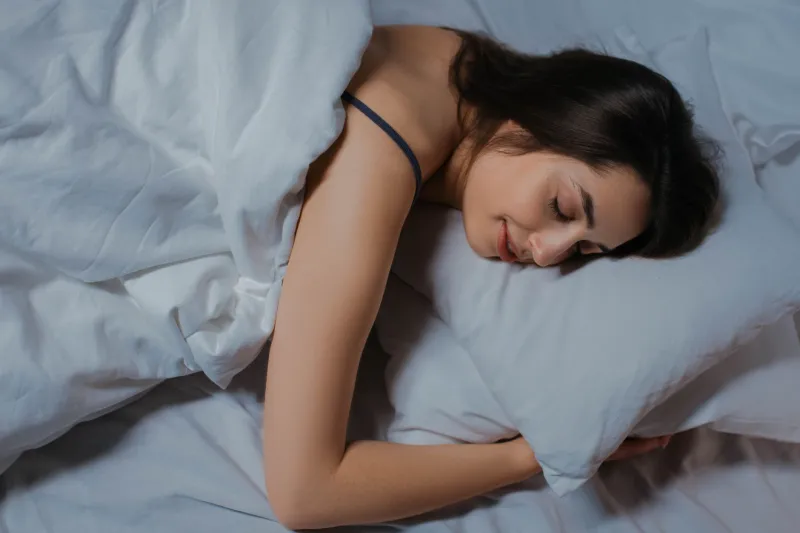
If you've ever found yourself at 1 a.m. watching a soft-spoken person on YouTube pretend to give you a scalp massage, you are not alone — and you're probably not even embarrassed about it anymore. ASMR sleep content has quietly become one of the most-watched categories on the internet, with hundreds of millions of views on videos that feature nothing more dramatic than whispering, gentle tapping, and the occasional crinkle of a paper bag.
But here's the real question: is it actually working? And if so, why does a whispered voice seem to knock people out faster than a $60 white noise machine?
Let's dig into what researchers are finding — and how you can put it to use tonight.
White Noise: The Old Reliable That Has Some Real Limits
White noise has been a go-to sleep aid for decades. The idea is straightforward: a consistent, broadband sound masks disruptive environmental noises — a partner snoring, traffic outside, a neighbor's TV — and gives your brain something neutral to settle into. And for a lot of people, it genuinely helps.
But here's where it gets interesting. White noise is what researchers call a passive auditory stimulus. It doesn't ask anything of your brain. It just sits there, flattening the sonic landscape. For light sleepers or people dealing with anxiety-driven insomnia, that flatness sometimes isn't enough to quiet a racing mind. Your thoughts still have plenty of room to run.
Studies on white noise and sleep have shown mixed results. Some research supports modest improvements in sleep onset time, particularly in noisy environments like hospitals. But for people whose insomnia stems from stress, overthinking, or hyperarousal — which is a huge chunk of the roughly 70 million Americans who deal with chronic sleep issues — white noise alone often falls short.
What ASMR Does Differently
ASMR, or Autonomous Sensory Meridian Response, is that pleasantly tingly, deeply relaxed feeling some people get in response to specific sounds and visuals: whispering, slow hand movements, soft tapping, or someone speaking to them in a calm, attentive way. Not everyone experiences the tingles, but a huge portion of ASMR viewers report feeling deeply relaxed even without them.
Here's the key difference from white noise: ASMR is an active experience for your brain, but in the best possible way.
Research published in journals like PLOS ONE and work from the University of Sheffield has found that ASMR triggers measurable physiological changes — reduced heart rate, lowered skin conductance levels (a marker of stress arousal), and mood improvements that can last for hours. Brain imaging studies suggest ASMR activates regions associated with reward, social bonding, and emotional regulation.
That last part — social bonding — is probably the secret ingredient.
The "Personal Attention" Effect
One of the most consistent findings in ASMR research is that content mimicking personal attention tends to be the most effective. Think: a soft-spoken person acting as if they're doing your hair, examining your face, or reading you a bedtime story. It sounds a little odd on paper, but neurologically it makes a lot of sense.
Humans are wired to feel safe in the presence of calm, attentive others. It goes back to early attachment — being soothed by a caregiver's gentle voice is one of the first experiences that teaches our nervous system what "safe" feels like. ASMR, especially whispering and soft speech directed at the viewer, seems to tap into that same circuitry.
White noise can't do that. It has no social signal. It doesn't tell your nervous system that someone is nearby, that everything is okay, that you can let your guard down. A whispered voice — even from a stranger on a screen — carries that implicit message in a way that pink noise or rain sounds simply don't.
For people with anxiety-related insomnia, this distinction matters enormously. Their nervous system isn't just looking for quiet — it's looking for safety.
Building an ASMR Sleep Routine That Actually Sticks
Knowing the science is one thing. Getting it to actually work for you is another. Here's how to set yourself up for success:
Start with a wind-down window. Don't just throw on an ASMR video the second your head hits the pillow. Give yourself 20–30 minutes of low-stimulation time beforehand — dim the lights, put your phone on do-not-disturb, maybe do a few minutes of slow breathing. Think of ASMR as the final stage of a relaxation runway, not a light switch.
Experiment with triggers. Not everyone responds to the same sounds. Whispering works for a lot of people, but you might find that soft tapping, page-turning, or even gentle roleplay scenarios (like a simulated library visit or a calm doctor's appointment) hit differently. Give yourself a few sessions to explore before deciding what your sleep playlist looks like.
Use headphones — or don't. Some people find that headphones intensify the personal-attention effect and block out real-world distractions. Others find them uncomfortable for sleep. Try both. There are also sleep-specific earbuds designed for side sleepers if comfort is an issue.
Keep a consistent time. Just like any sleep intervention, consistency amplifies results. Using ASMR at the same time each night helps your brain start associating those sounds with sleep onset — essentially training a new relaxation reflex.
Don't stress about the screen. Blue light concerns are valid in general, but if you're watching ASMR video content, consider using a red-light filter or night mode, or look for audio-only ASMR tracks on platforms like Spotify or dedicated apps. Some people find that removing the visual component actually helps them drift off faster.
A Note on What ASMR Isn't
It's worth saying clearly: ASMR isn't a cure for clinical insomnia, and it's not a replacement for medical care if you're dealing with a serious sleep disorder. If you're consistently getting fewer than six hours of sleep, waking up exhausted regardless of how long you're in bed, or your sleep issues are significantly affecting your daily life, please talk to a healthcare provider. Cognitive Behavioral Therapy for Insomnia (CBT-I) remains the gold-standard treatment and is more accessible than ever through telehealth platforms.
That said, for the vast majority of people dealing with garden-variety stress-related sleeplessness — the kind where your brain just won't shut up — ASMR is a genuinely compelling, low-risk, completely free tool worth having in your toolkit.
The Bottom Line
White noise works by masking the outside world. ASMR works by convincing your nervous system that the inside world is safe enough to let go. For a lot of people — especially those whose sleep troubles are rooted in anxiety or an overactive mind — that's a meaningful difference.
A whisper, it turns out, can carry a lot of weight. And sometimes all your brain needs to finally rest is the quiet signal that someone is there, everything is calm, and it's okay to drift.
That's the whole idea behind what we do here at Win Within. Breathe deep. Relax. Heal from within — starting with a good night's sleep.