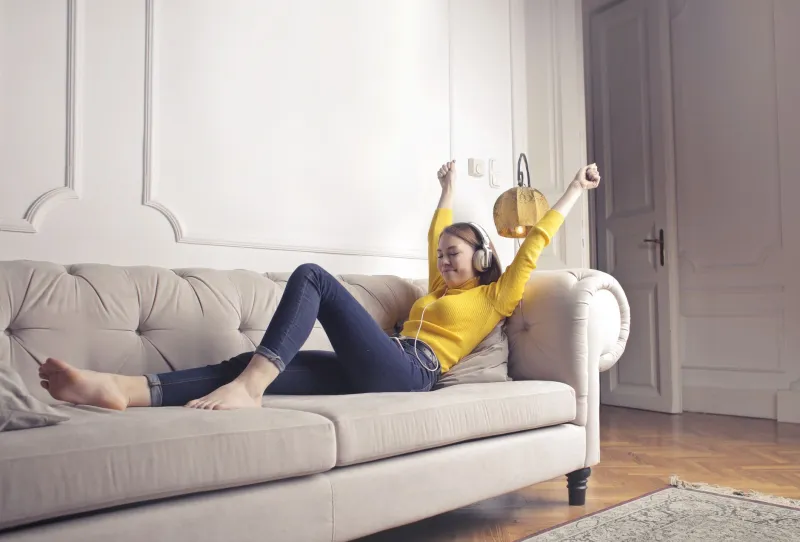
Set the Scene: How Designing Your Physical Space Can Transform Your Relaxation Practice
You've curated a solid playlist. You've got your favorite creator queued up. You're lying down with your headphones in — and then your neighbor's dog starts barking, a notification buzzes through your phone, and the overhead light is doing that faint flicker thing again. Suddenly, you're more tense than when you started.
Here's the thing about ASMR and meditation: the content is only half the equation. The space you're in when you consume it either amplifies or undermines everything the content is trying to do. And in most American homes — busy, connected, often overstimulating — the default environment is basically the opposite of what your nervous system needs to truly let go.
The good news? You don't need to build a dedicated meditation room or spend a fortune on a sensory overhaul. Small, intentional changes to your physical environment can make a remarkable difference. Let's talk about what actually matters and why.
Your Brain Is Always Reading the Room
Before we get into the practical stuff, it's worth understanding why your environment has such a direct line to your stress response. Your brain is constantly scanning your surroundings for safety cues — a process that happens largely below conscious awareness. Bright, harsh lighting signals alertness. Clutter and visual noise create low-grade cognitive load. Unpredictable sounds trigger orienting responses that interrupt relaxation before it can fully take hold.
When your environment is calm and consistent, your nervous system can stop scanning and start resting. That's the shift you're trying to create — not just in your mind, but in the physical world around you.
Lighting: The Easiest Win You're Probably Ignoring
Overhead lighting is one of the most overlooked stressors in the average American home. Bright white or cool-toned bulbs mimic daylight, which tells your brain it's time to be awake and alert. Using this kind of lighting in the evening actively suppresses melatonin production and makes it significantly harder to wind down — with or without ASMR.
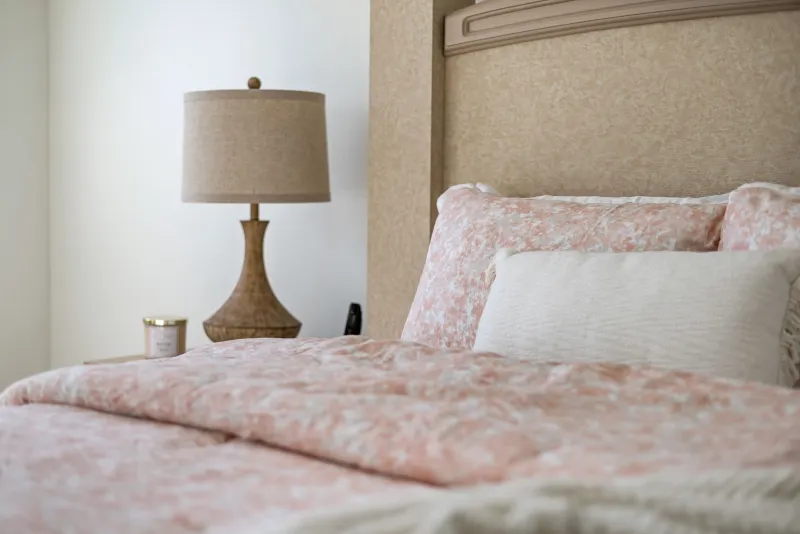
Swapping to warm-toned bulbs (look for 2700K or lower on the packaging) in your relaxation space is a small change with outsized impact. Even better: add a lamp or two at floor or table level rather than relying on overhead fixtures. Lower light sources create a cozier, more cave-like atmosphere that naturally encourages your nervous system to downshift.
If you can, consider a simple dimmer switch — they're inexpensive to install and give you real-time control over the ambiance of your space. Dimming your lights about an hour before your relaxation practice signals to your body that it's time to transition out of active mode.
Bonus: Warm candlelight (or a flameless LED candle if you prefer) during ASMR sessions adds a subtle visual softness that many people find deeply calming.
Sound Isolation: Working With What You Have
ASMR content is designed to be heard in detail — the soft breath between words, the delicate tap of a fingernail on glass, the barely-there rustle of fabric. Competing background noise doesn't just distract you; it actively reduces the contrast that makes those quiet sounds so effective.
You don't need a soundproofed room to address this. Here's what actually helps:
Headphones over speakers. This is the single biggest upgrade you can make. A decent pair of over-ear headphones (they don't have to be expensive) creates an intimate sonic environment that speakers simply can't replicate. Binaural ASMR content especially benefits from headphones — it's designed to be experienced that way.
Soft furnishings absorb sound. Hard surfaces reflect noise; soft ones absorb it. Rugs, curtains, upholstered furniture, throw pillows, and even bookshelves lined with books all reduce ambient echo and background noise. If your relaxation space feels echoey or "live," adding textiles will help.
White noise as a buffer. A small white noise machine near the door of your room can mask intrusive sounds from elsewhere in your home or building without competing with your ASMR content. Set it at a low, steady volume and let it create a soft sonic boundary around your space.
Temperature: The Underrated Relaxation Variable
Research consistently shows that slightly cool environments — somewhere in the range of 65 to 68°F — are associated with better sleep and deeper relaxation. If your space is too warm, your body has to work to regulate its temperature, which keeps your system more activated than you want.
If you can't control your room temperature easily, a lightweight blanket is your friend. The act of getting under a blanket — even in a warm room — creates a sense of physical containment that many people find psychologically soothing. Weighted blankets, in particular, have shown real benefits for anxiety reduction, likely because the gentle pressure mimics deep touch stimulation.
Scent: A Direct Line to Your Nervous System
Your olfactory system has a more direct connection to the limbic system (your brain's emotional processing center) than any other sense. That's why a particular smell can instantly transport you to a memory or shift your mood without any conscious effort.
Building a consistent scent into your relaxation practice essentially trains your brain to associate that smell with calm. Over time, the scent alone becomes a relaxation trigger — before you've even put your headphones in.
Lavender is the most well-researched option, with multiple studies supporting its anxiolytic (anxiety-reducing) effects. Chamomile, sandalwood, and bergamot are also popular choices. A simple diffuser with a few drops of essential oil is all you need. Keep the scent consistent — using the same one every session accelerates the conditioning effect.
Visual Clutter and the Case for Simplicity
Your eyes are always sending information to your brain, even when you think you're relaxing. A visually cluttered space — piles of laundry, stacks of paper, too many objects in your field of view — creates low-level cognitive stimulation that makes it harder to fully disengage.
You don't need a minimalist aesthetic to benefit from this principle. Even just clearing the immediate area around your relaxation spot — the bedside table, the corner you've claimed, the couch cushion zone — reduces visual noise enough to make a difference.
If a full tidy feels overwhelming, try this: before your ASMR session, spend two minutes doing a quick "visual reset" of just the area you'll be in. It becomes a small ritual that signals the start of your practice.
Putting It All Together
You don't need to overhaul your entire home. Pick one space — your bedroom, a reading nook, even a corner of your living room — and start layering in these elements gradually. Warm lighting first. Then a rug or some curtains if the room feels echoey. A diffuser on the nightstand. A blanket you love.
Over time, that space will start to carry its own calm. Your body will begin to relax the moment you walk into it, before you've pressed play on anything. That's the goal — not just a good listening session, but an environment that's always working gently in your favor.
Win within starts with the world around you.