When Your Brain Hits a Wall: Using ASMR as an In-the-Moment Reset for Anxiety and Overstimulation
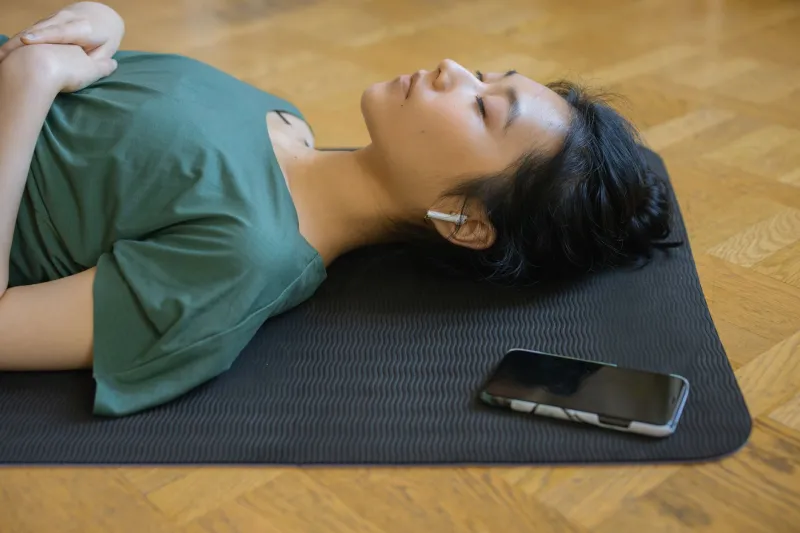
You know the feeling. It doesn't always announce itself dramatically. Sometimes it creeps in — a tightness behind your eyes, a low buzzing in your chest, the sense that every sound around you is just slightly too loud and every task is just slightly too much. Other times it hits fast: a conversation goes sideways, the news is terrible again, your inbox is a disaster, and suddenly you're standing in your kitchen unable to remember what you came in there for.
That's overstimulation. And for a lot of people — especially those dealing with anxiety, high-sensitivity nervous systems, or just the general overwhelm of modern American life — it happens a lot more than anyone talks about.
The good news is that your nervous system isn't broken. It's doing exactly what it's designed to do. The better news is that you can interrupt the spiral before it takes over your whole afternoon. And ASMR, used intentionally and specifically, can be one of the most effective tools in that interruption.
What's Actually Happening When You Spiral
To use any wellness tool well, it helps to understand what you're working with. When overstimulation or acute anxiety kicks in, your brain's threat-detection system — the amygdala — has essentially sounded the alarm. Your body floods with cortisol and adrenaline. Your heart rate goes up. Your breathing gets shallow. Your prefrontal cortex, the part responsible for calm, rational thinking, goes partially offline.
This is the physiological cascade that makes anxiety feel so all-consuming. You're not overreacting. You're caught in a very real biological loop.
The goal of any reset technique — whether it's breathing exercises, grounding practices, or sensory tools like ASMR — is to send a signal back to the nervous system that the threat has passed. To coax the parasympathetic nervous system back into the driver's seat. To essentially say: we're okay, we can come down now.
ASMR does this through a specific pathway: sensory input. Soft, predictable, gentle sounds — whispering, tapping, crinkling, flowing water — activate the brain's reward and safety circuits. For people who experience the ASMR response, this can produce a rapid drop in physiological arousal. Even for those who don't experience the classic "tingles," calm auditory environments have been shown to reduce cortisol and lower heart rate.
Recognizing Your Overstimulation Signals
Before you can use ASMR as an emergency reset, you need to catch the spiral early. Most of us have patterns — specific physical or emotional cues that show up before we're fully overwhelmed. The problem is, we're often too busy to notice them until it's too late.
Here are some common early-warning signs worth learning to recognize in yourself:
Physical signals:
- Jaw clenching or shoulder tension you didn't notice building
- A feeling of pressure behind your eyes or temples
- Shallow, upper-chest breathing
- Sensitivity to sound, light, or touch that feels suddenly heightened
- A buzzing or restless energy in your limbs
Cognitive signals:
- Racing thoughts that jump between unrelated worries
- Difficulty finishing a single task or thought
- A sense that everything feels urgent simultaneously
- Irritability that seems disproportionate to what's happening
Emotional signals:
- Feeling inexplicably tearful or on edge
- A low-grade sense of dread without a clear source
- The urge to escape or withdraw from whatever you're doing
Spend a week just noticing. You don't have to do anything about it yet — just start observing the sequence your body moves through before you hit a wall. That awareness alone is a form of nervous system regulation.
Building Your ASMR Emergency Toolkit
Not all ASMR is built for crisis moments. Slow, hour-long sleep videos are great for winding down at night, but when you're mid-spiral, you need something targeted. Here's how to build a personal toolkit designed specifically for real-time reset.
Step 1: Identify your fastest-acting triggers. ASMR triggers vary enormously between people. Some find whispered voices immediately calming; others need non-vocal sound. Think back to sensory experiences that have produced a fast sense of calm for you — rain on a window, the sound of pages turning, someone softly tapping on a surface. Those are your anchors. Build your emergency playlist around them, not around what's popular.
Step 2: Keep it short and accessible. Create a playlist or folder of 5–10 minute ASMR clips specifically for acute moments. When you're already overwhelmed, the last thing you need is to scroll YouTube for seven minutes looking for the right video. Pre-select. Bookmark. Make access as frictionless as possible.
Step 3: Pair it with a physical anchor. ASMR works faster when combined with a simple grounding technique. Try this: when you put your headphones in, place both feet flat on the floor and take three slow breaths before you press play. This small ritual signals to your brain that you're intentionally shifting modes. Over time, even the act of reaching for your headphones can start to trigger a mild relaxation response — a form of conditioned calm.
Step 4: Use it proactively, not just reactively. The most effective use of any regulation tool is before you need it desperately. If you know Tuesday afternoons are brutal, or that your commute tends to ramp up your anxiety, build in a short ASMR reset before you hit the threshold. Five minutes of soft sound before a hard conversation is infinitely more effective than trying to calm down after you've already spiraled.
A Note on Sensory Sensitivity
For people with sensory processing differences — including those with ADHD, autism, anxiety disorders, or high sensitivity — overstimulation can be a more frequent and intense experience. ASMR can be genuinely helpful for this population, but it can also occasionally backfire. Some textures, frequencies, or vocal qualities can increase agitation rather than reduce it.
If you find certain ASMR content makes you feel more on edge, that's important information. It doesn't mean ASMR isn't for you — it means you need to be more selective. Experiment with different trigger types and pay attention to your body's honest feedback. The goal is always to move toward calm, not to force yourself through content that isn't working.
The Bigger Shift
Using ASMR as a sensory reset isn't about checking out of your life. It's about staying in it — with enough nervous system regulation to actually show up for the moments that matter.
The win here isn't about achieving some permanent state of zen. It's about getting faster at catching yourself, shorter spirals, and a growing confidence that you have tools that actually work. That confidence itself is calming. When you know you can interrupt an anxiety loop, the loop loses some of its power before it even starts.
Breathe deep. Reset. Come back.
You've got this.