When Calm Content Makes You Anxious: Understanding the ASMR Sensitivity Paradox
You've seen the videos. Soft voices, gentle tapping, the slow rustle of paper. Everyone in the comments seems to be melting into their couch. So why does watching the same content leave you feeling weirdly on edge?
You're not broken. And you're definitely not alone.
For a growing number of people, ASMR content—designed specifically to calm the nervous system—produces the opposite effect. Irritability, restlessness, even a creeping sense of dread. It's one of the more puzzling paradoxes in the wellness space, and it's worth unpacking why it happens and what you can actually do about it.
Your Nervous System Has Its Own Opinion
Here's the thing about relaxation: it's not one-size-fits-all. The autonomic nervous system, which governs your stress and calm responses, is deeply personal. What signals safety to one person can register as threat or discomfort to another—and that's not a character flaw, it's biology.
When someone with a hypervigilant nervous system (common in people with anxiety disorders, PTSD, or even chronic stress) encounters certain ASMR sounds, the brain doesn't automatically read them as soothing. Instead, it may flag them as something to pay close attention to. Soft, close-up whispering, for example, can mimic the sound of someone speaking quietly so they won't be overheard—which some brains interpret as a subtle threat signal rather than a comfort cue.
This is especially true if you've spent years in high-alert mode. Your nervous system has essentially been trained to treat quiet, unexpected, or intimate sounds as things worth monitoring.
The Misophonia Connection
Another piece of the puzzle is misophonia—a condition where specific sounds trigger strong emotional or physiological reactions, often anger, disgust, or intense anxiety. Misophonia is more common than most people realize, and many of the sounds that appear in ASMR content (chewing, mouth sounds, repetitive tapping, breathing) are classic misophonia triggers.
For someone with misophonia, an ASMR video featuring crunchy food sounds or lip smacking isn't relaxing—it's genuinely distressing. The brain's emotional processing centers respond to these sounds with a kind of visceral alarm that no amount of deep breathing can easily override.
If certain sounds make your skin crawl or fill you with an irrational but overwhelming urge to leave the room, misophonia might be worth exploring with a mental health professional.
Intimacy Without Context Can Feel Unsettling
A lot of ASMR content is deliberately intimate. Close-mic'd voices, simulated personal attention scenarios, soft eye contact with the camera. For many viewers, this manufactured closeness is exactly the point—it replicates the comfort of being cared for.
But intimacy without established trust can feel invasive rather than nurturing. If you've experienced relational trauma, or if you're simply someone who needs a longer runway before you feel safe with closeness, these scenarios can activate discomfort rather than ease.
This doesn't mean ASMR is off the table for you. It means the format matters more than you might have realized.
Identifying What's Actually Bothering You
The first step toward making relaxation content work for you—or knowing when to walk away from it—is getting specific about your reactions. Instead of writing off ASMR entirely after one uncomfortable experience, try keeping a loose mental (or written) log:
- What type of content triggered the reaction? Was it a voice, a specific sound, a visual element, or the overall scenario?
- What did the reaction feel like physically? Tension in your chest? Irritability? A sudden urge to close the tab?
- What time of day were you watching? Anxiety responses can be more pronounced when you're already running on empty or overstimulated.
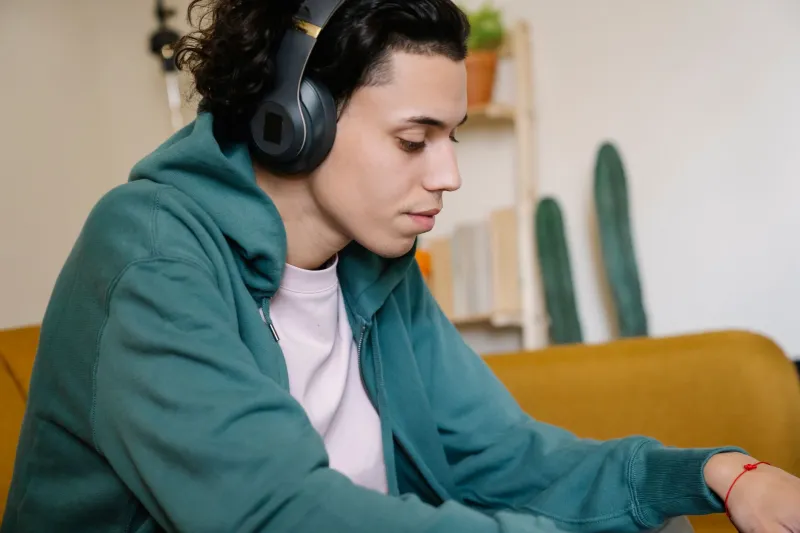
- Were you watching with headphones? Binaural ASMR through headphones is far more immersive—and for some people, that level of closeness is simply too much.
Patterns will start to emerge. Maybe it's specifically mouth sounds that get you. Maybe roleplay scenarios feel too contrived and make you more self-conscious instead of relaxed. Maybe you're totally fine with tapping videos but whispering makes you tense. That information is genuinely useful.
Practical Ways to Modify Your Experience
Once you've identified your friction points, you have options.
Skip the headphones. Playing ASMR through a phone speaker or laptop reduces the immersive quality that can feel overwhelming. You still get the ambient effect without the sensation of someone whispering directly into your brain.
Stick to non-voice content. There's an enormous range of ASMR that doesn't involve any speaking—rain sounds, fire crackling, keyboard typing, nature ambience. If voices are your trigger, these can deliver a similar sense of gentle stimulation without the intimacy factor.
Try longer videos as background rather than focus content. Instead of sitting down to watch ASMR, let it play while you do something else—journaling, light stretching, making tea. Removing it from the center of your attention can reduce the pressure to respond a certain way.
Give yourself an exit without guilt. One of the quieter stressors around wellness content is the feeling that you should be relaxing. If something isn't working, turning it off is not a failure. It's information.
Finding Your Version of Calm
The goal at Win Within has always been about healing from the inside out—and that means working with your nervous system, not forcing it into a mold that doesn't fit. If traditional ASMR content consistently makes you more anxious, that's a clear signal to explore other paths.
Nature soundscapes, lo-fi music, guided breathwork, or even simple silence might be far more effective for your particular wiring. The win isn't finding the most popular relaxation tool. The win is finding the one that actually works for you.