Meditation Apps or ASMR Videos: How to Pick the Wellness Tool That Actually Sticks

The wellness world loves to present options as if more choices automatically means better outcomes. Download this app. Subscribe to that channel. Try breathwork. No wait, try cold plunges. No wait—
It's exhausting. And ironically, the overwhelm of choosing how to relax can become its own source of stress.
So let's simplify. This isn't about ranking wellness tools or declaring a winner. It's about helping you figure out which approach is actually compatible with your life—because the best relaxation practice is the one you'll realistically come back to tomorrow.
First, Understand What You're Actually Trying to Fix
Before picking a tool, it helps to get honest about the shape of your stress. Not all stress looks the same, and different modalities are better suited to different problems.
Chronic background tension — the low-grade hum of anxiety that never fully goes away — often responds well to consistent, daily practices like meditation or breathwork. These tools are designed to gradually rewire stress response patterns over time.
Acute stress spikes — the kind that hits before a big presentation or during a rough afternoon — are often better addressed with something immediate and sensory, like ASMR content, a short body scan, or even a five-minute walk.
Sleep-related struggles — racing thoughts at bedtime, difficulty winding down — tend to respond to a combination of both, with environment playing a big role too.
Knowing which category you're mostly working with gives you a starting point.
The Case for Meditation Apps
Apps like Calm, Headspace, and Insight Timer have built massive user bases for good reason. They offer structure. For people who find unguided silence uncomfortable or who struggle to know what to do once they sit down, a guided meditation provides a handrail.
Meditation apps tend to work especially well if:
- You're goal-oriented and like tracking progress
- You want something that builds skill over time (not just momentary relief)
- You prefer a human voice walking you through the experience
- You're dealing with thought spirals that need active redirection
The downside? They require a degree of intentional engagement. You have to sit down, open the app, choose a session, and commit. For people with fragmented schedules or decision fatigue, that small friction can be enough to derail the habit entirely.
The Case for ASMR Content
ASMR videos—and increasingly, ASMR-specific playlists and audio tracks—operate differently. They're largely passive. You don't have to do anything. You just listen, and let the sounds do the work.
This low-effort entry point is a genuine advantage for people who are deeply fatigued, overstimulated, or resistant to anything that feels like another task on their to-do list.
ASMR tends to work especially well if:
- You find guided meditation frustrating or hard to follow
- You want something you can use while doing other things (winding down, light cleaning, getting ready for bed)
- You respond strongly to sensory experiences
- You don't want to feel like you're working at relaxing
The limitation here is variability. ASMR content quality ranges enormously, finding what works for your specific triggers takes time, and unlike a structured app, there's no built-in progression or accountability.
Matching the Tool to the Moment
Here's where it gets practical. Rather than choosing one approach and sticking to it rigidly, consider matching your tool to your context.
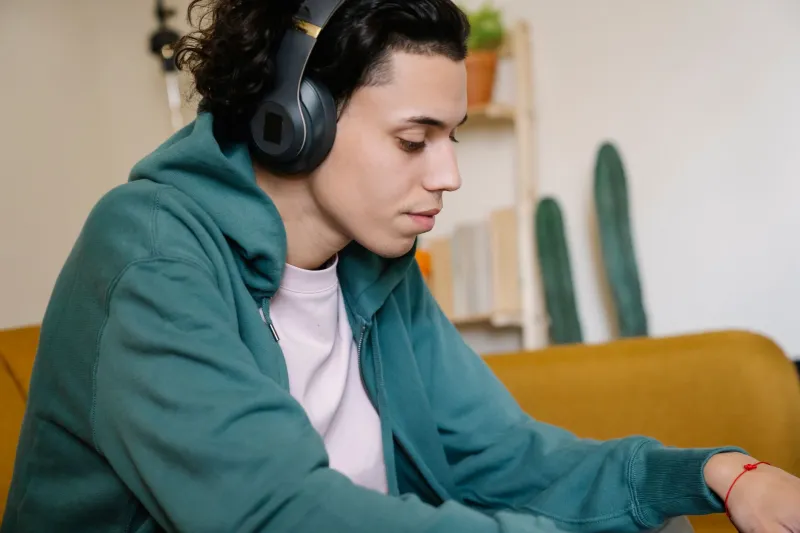
Commuting (public transit or passenger seat): ASMR audio or lo-fi playlists tend to win here. Headphones on, eyes open, no screen required. A short breathwork session also works well if you've got a regular route.
Work breaks: A 5-10 minute guided meditation from an app is genuinely effective during a lunch break or mid-afternoon slump. Headspace and Calm both have short sessions designed for exactly this. If you're in an open office and screens feel conspicuous, ASMR audio through one earbud is lower-profile.
Bedtime: This is where ASMR has a particularly strong track record. Long-form sleep videos or ambient soundscapes can ease the transition from alert to drowsy without demanding active participation. If you're someone whose mind races at night, pairing this with a short body scan meditation first can help quiet the mental chatter before you let the audio take over.
High-stress moments: Neither a 30-minute meditation nor a full ASMR video is realistic when you're in the middle of a stressful day. This is where simple breathing techniques—box breathing, 4-7-8, even just slow exhales—are genuinely underrated. They're fast, free, and require no equipment.
The Honest Answer: It's Usually Both
The most effective wellness routines rarely rely on a single tool. Think of it less like choosing a team and more like building a toolkit. Meditation apps build the foundation—they develop your capacity to notice and regulate your internal state over time. ASMR content provides accessible, low-effort relief when you need it in the moment.
If you've tried meditation apps before and quit because they felt like homework, ASMR might be the gentler on-ramp that gets you in the habit of carving out quiet time at all. And once that habit is established, adding a structured practice becomes much easier.
The win here isn't picking the objectively best tool. It's building something sustainable—something that fits inside your actual life, not a theoretical version of it.